Science-Backed Smarter Orthodontics

Our growing resource library of scientific evidence gives clinicians the ability to make data-driven decisions. Explore the science behind DentalMonitoring and how our technology provides operational and clinical solutions for orthodontists.

Need clinical evidence at your fingertips ?

Tell us the topic and our AI will deliver a curated evidence package with relevant studies, key findings, and direct links straight to your inbox in seconds.

Product Accuracy

Orthodontists need AI that processes intraoral scans with precision.

Learn how DentalMonitoring delivers the information you need, so that validating scans is simple and efficient.
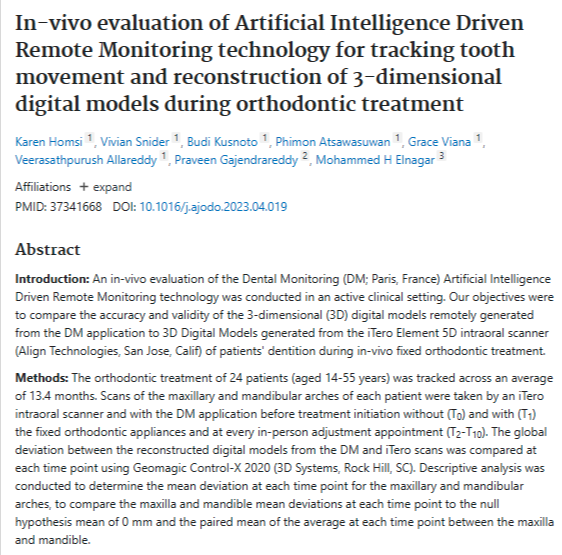
In-vivo evaluation of Artificial Intelligence Driven Remote Monitoring technology for tracking tooth movement and reconstruction of 3-dimensional digital models during orthodontic treatment

This in-vivo study evaluated the accuracy of DentalMonitoring’s AI-driven remote monitoring system by comparing its 3D digital models and tooth movement tracking to iTero intraoral scans in 24 orthodontic patients over 13.4 months. Using 233 superimpositions analyzed with Geomagic Control-X software, the study found no clinically significant differences between the two model sources, with all deviations remaining within the ±0.5 mm threshold. The results validate DM’s ability to reliably track tooth movement and reconstruct 3D models to a clinically acceptable standard throughout active orthodontic treatment.

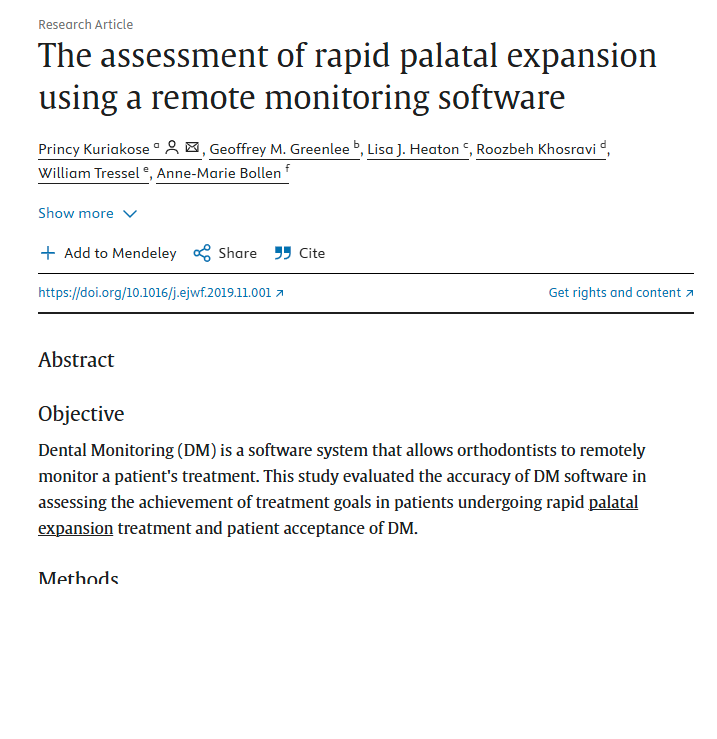
The assessment of rapid palatal expansion using a remote monitoring software

This study assessed the accuracy and patient acceptance of DentalMonitoring (DM) software for remotely tracking rapid palatal expansion (RPE) treatment. In 20 patients treated with a Hyrax expander, DM measurements of intermolar width closely matched those from intraoral exams and digital models, with no significant differences. DM also successfully identified all posterior crossbite corrections. While 71% of participants found the app easy to use and 43% preferred it over in-person visits, usability challenges—especially among younger patients—limited broader adoption. The study concluded that DM can effectively replace in-person RPE checks, though patient compliance and imaging quality remain potential barriers.

Accuracy of DentalMonitoring 3D digital dental models using photograph and video mode

This study aimed to test the accuracy of the 3-dimensional (3D) digital dental models generated by the DentalMonitoring (DM) smartphone application in both photograph and video modes over successive DM examinations in comparison with 3D digital dental models generated by the iTero Element intraoral scanner. Results showed that 3D digital dental models generated by the DM smartphone application in photograph and video modes are accurate enough to be used for clinical applications.
business-people-shaking-hands-greeting

Accuracy of a smartphone-based orthodontic treatment-monitoring application

The purpose of the study: to investigate the reliability and accuracy of the DentalMonitoring system in patients undergoing orthodontic treatment with a rapid maxillary expander. Results showed that the intercanine and intermolar measurement differences were deemed equivalent and the software seems to provide an accurate assessment of linear tooth movements.

University study- Thesis Accuracy of Remote Dental Monitoring Tooth Tracking Technology in Orthodontics

Results indicate the DM AI photo tracking algorithm is capable of tracking tooth movement to a clinically acceptable degree for orthodontic applications. The results affirm the findings of the three previous studies published in 2019 and provide evidence in a clinical environment.

Thesis Study-Reliability and Accuracy of a Novel Photogrammetric Orthodontic Monitoring System

This study aimed to test the accuracy of the 3-dimensional (3D) digital dental models generated by the Dental Monitoring (DM) smartphone application in both photograph and video modes over successive DM examinations in comparison with 3D digital dental models generated by the iTero Element intraoral scanner. The study demonstrated a high level of accuracy when comparing movements tracked by the Dental Monitoring system against those of the reference scanner. Results showed no clinically significant differences, according to the American Board of Orthodontics-determined standards. 3D digital dental models generated by the DM smartphone application in photograph and video modes are accurate enough to be used for clinical applications.
Back To Top

Practice Optimization and Growth

Scalable automation is vital to long-term profitability in orthodontic practices.

Read the collected scientific literature about how DentalMonitoring fosters opportunities for growth.
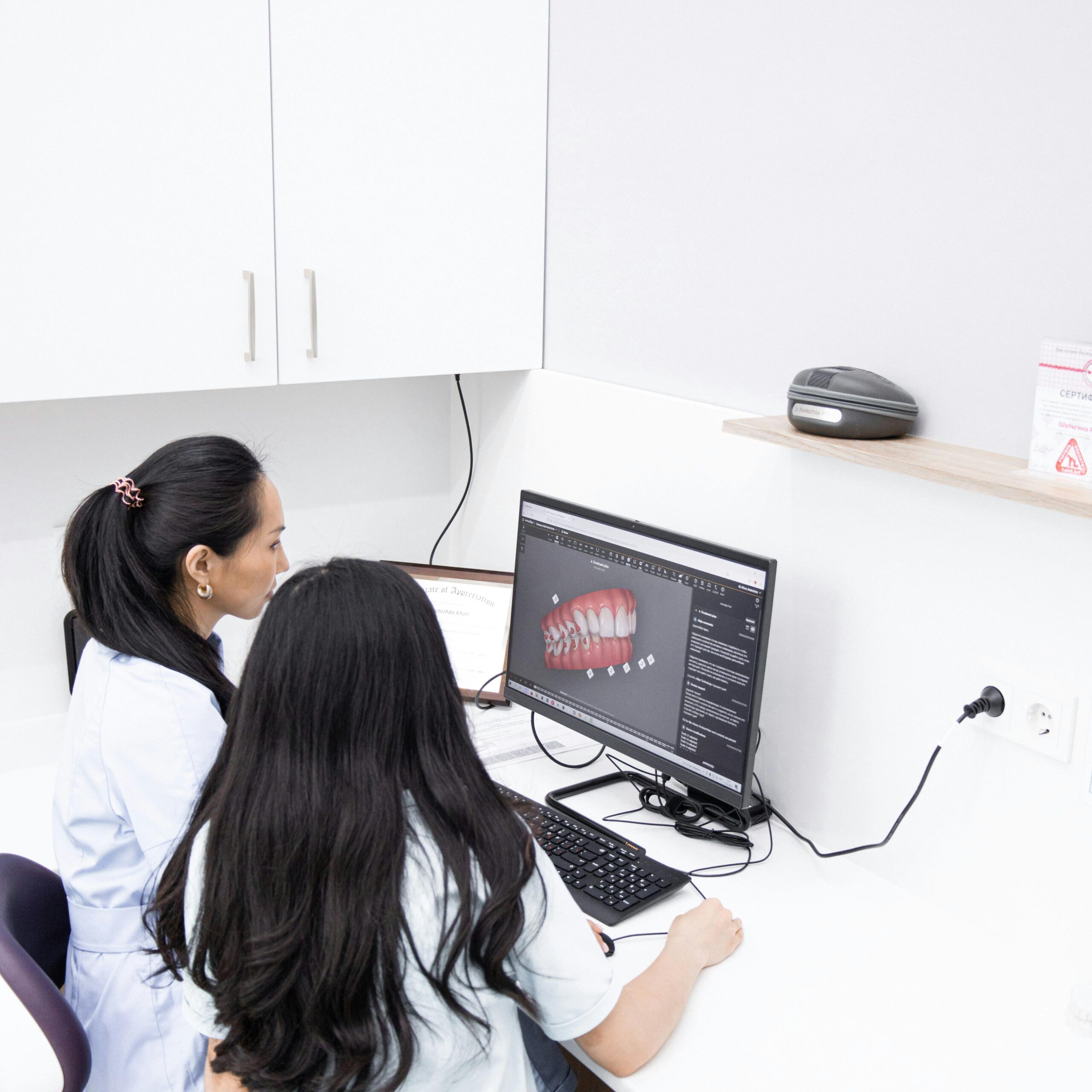
Accuracy of DentalMonitoring’s artificial intelligence in detecting the loss of aligners’ auxiliaries: a retrospective multi-centric study

This study evaluates the accuracy of DentalMonitoring’s AI in detecting the loss of aligner auxiliaries, specifically attachments and buttons, using sequential intraoral scans from 719 aligner patients across multiple U.S. centers. The results showed extremely high performance, with sensitivity above 98% for both attachment and button loss detection, and specificity of 100% and 99.0%, respectively. Overall, the paper confirms that DentalMonitoring can reliably identify auxiliary debonding events and help reduce the risk of these issues going unnoticed during treatment.

Assessing an AI-driven remote monitoring system for reliable clinical photo acquisition and patient usability

This study evaluates the reliability and usability of DentalMonitoring as an AI-driven remote monitoring tool for orthodontic follow-up. Conducted across multiple sites in the United States, the research showed that patients of different ages, including individuals with physical disabilities, were able to complete scans with ease. The study also found a 98.9% agreement between DentalMonitoring photo assessments and live clinical evaluations, confirming that the system can consistently produce high-quality, clinically suitable image sets. Overall, the paper highlights DentalMonitoring as a user-friendly and highly reliable solution for remote orthodontic monitoring.

Pilot case control evaluation of artificial intelligence assisted orthodontic monitoring and pediatric patient perception

This Scientific Reports article evaluates the impact of AI-assisted DentalMonitoring on pediatric orthodontic patients treated with Invisalign First. In this pilot study of 39 children aged 7 to 12, the group monitored with DentalMonitoring had significantly fewer in-office appointments than the control group, while showing no significant differences in treatment duration, refinements, or aligner use. Patient perception was also highly positive: most children found scanning easy, all reported satisfaction with communication with their orthodontist, and all were satisfied or very satisfied with the DentalMonitoring experience. Overall, the study suggests that AI-assisted remote monitoring can reduce chairside visits while maintaining treatment outcomes and a strong patient experience in young orthodontic patients.

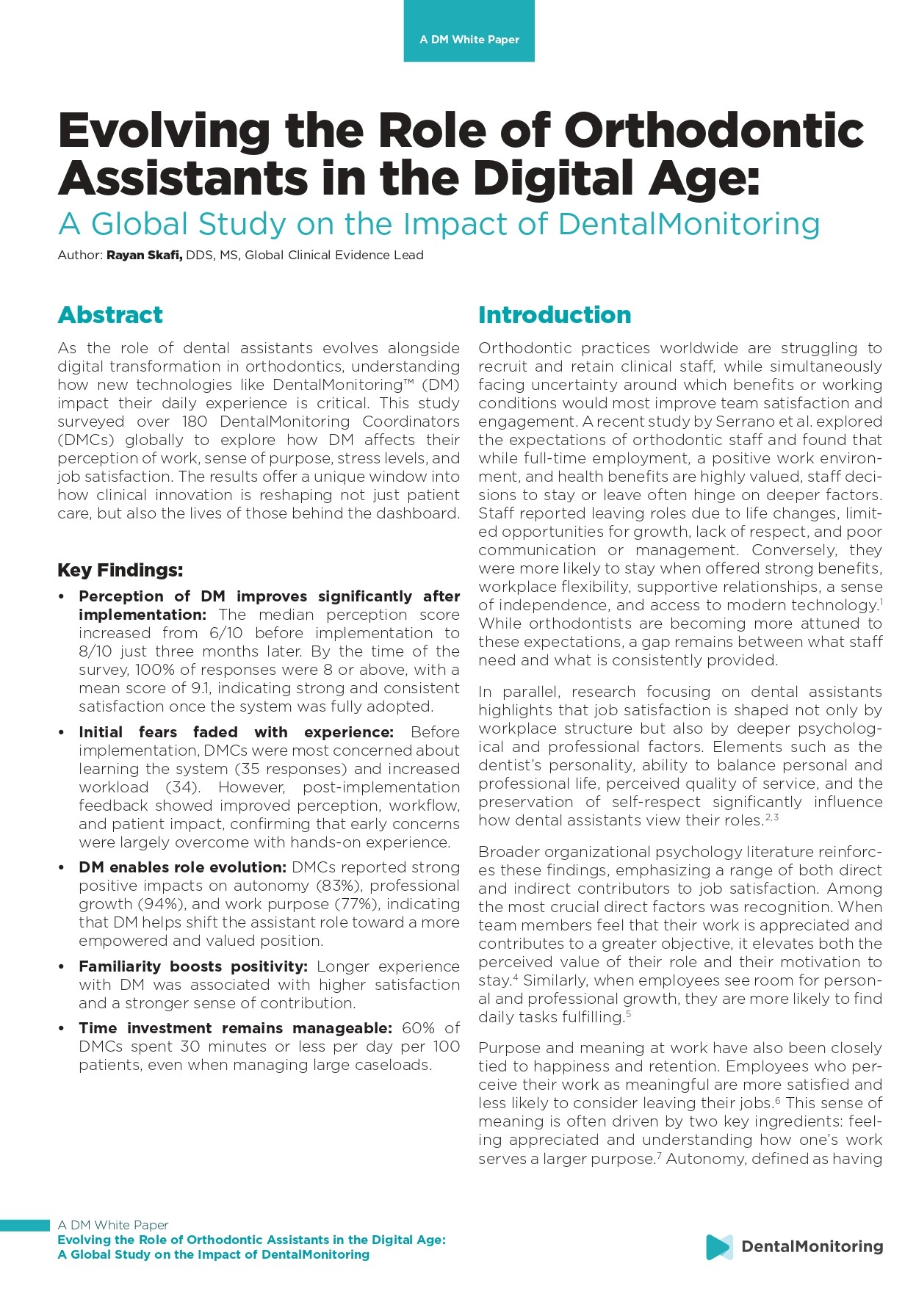
Evolving the Role of Orthodontic Assistants in the Digital Age : A Global Study on the Impact of DentalMonitoring

This white paper explores how DentalMonitoring is transforming the daily role of orthodontic assistants in practices worldwide. Based on feedback from more than 180 DentalMonitoring Coordinators globally, the study shows that adoption of DM improves job satisfaction, strengthens sense of purpose, and supports greater autonomy and professional growth. Initial concerns around workload and system learning decreased significantly with experience, while most respondents reported that time investment remained manageable. Overall, the paper highlights how digital tools like DentalMonitoring can help create a more empowered, valued, and future-ready orthodontic team.

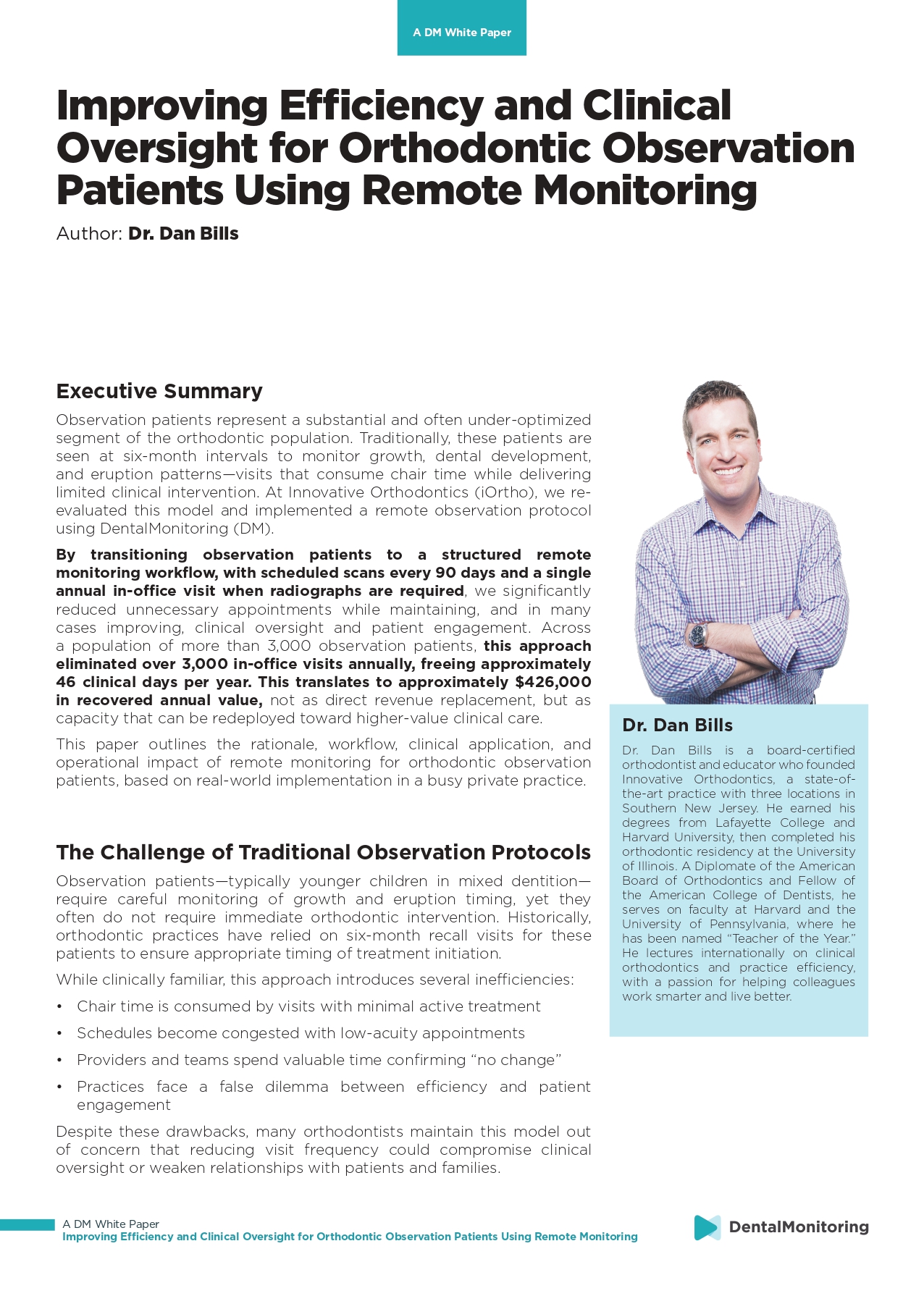
Improving Efficiency and Clinical Oversight for Orthodontic Observation Patients Using Remote Monitoring

This white paper by Dr. Dan Bills explains how remote monitoring can improve the management of orthodontic observation patients. By replacing frequent in-office check-ups with scheduled remote scans and only one annual in-person visit when needed, practices can reduce unnecessary appointments while maintaining strong clinical oversight. In a population of more than 3,000 patients, this approach eliminated over 3,000 visits per year, freed approximately 46 clinical days, and generated an estimated $426,000 in annual recovered value. The study shows that DentalMonitoring supports a more efficient, patient-friendly, and scalable observation workflow.
big-data-technology-business-finance-concept

Outcomes of clear aligner treatment with and without Dental Monitoring: A retrospective cohort study #3

The purpose of this study is to compare the effects of Invisalign clear aligner treatment with and without Dental Monitoring (DM) for treatment duration, number of appointments, refinements and refinement aligners, and accuracy of Invisalign in achieving predicted tooth positions (aligner tracking). DM with Invisalign therapy resulted in a reduced number of appointments by 3.5 visits (33.1%). The DM group also achieved a clinically similar accuracy in obtaining predicted tooth movements compared with the control group in 1.7 fewer months, indicating improved aligner tracking in the DM group.

Dental Monitoring Application: is it valid innovation in the Orthodontics practice?

The purpose of this study is to show the effectiveness of DentalMonitoring® with a self-ligating straight-wire appliance over 10 weeks. Results showed that applying DM with the self-ligating technique reduced number of appointments for each patient from 3 appointments in 10 weeks to 2 appointments. This means that there is a reduction in the mean period of chair time, of material 'costs, number of visits; moreover, there is an increase in frequency of patient' s monitoring, resulting in a more precise evaluation of orthodontic treatment.

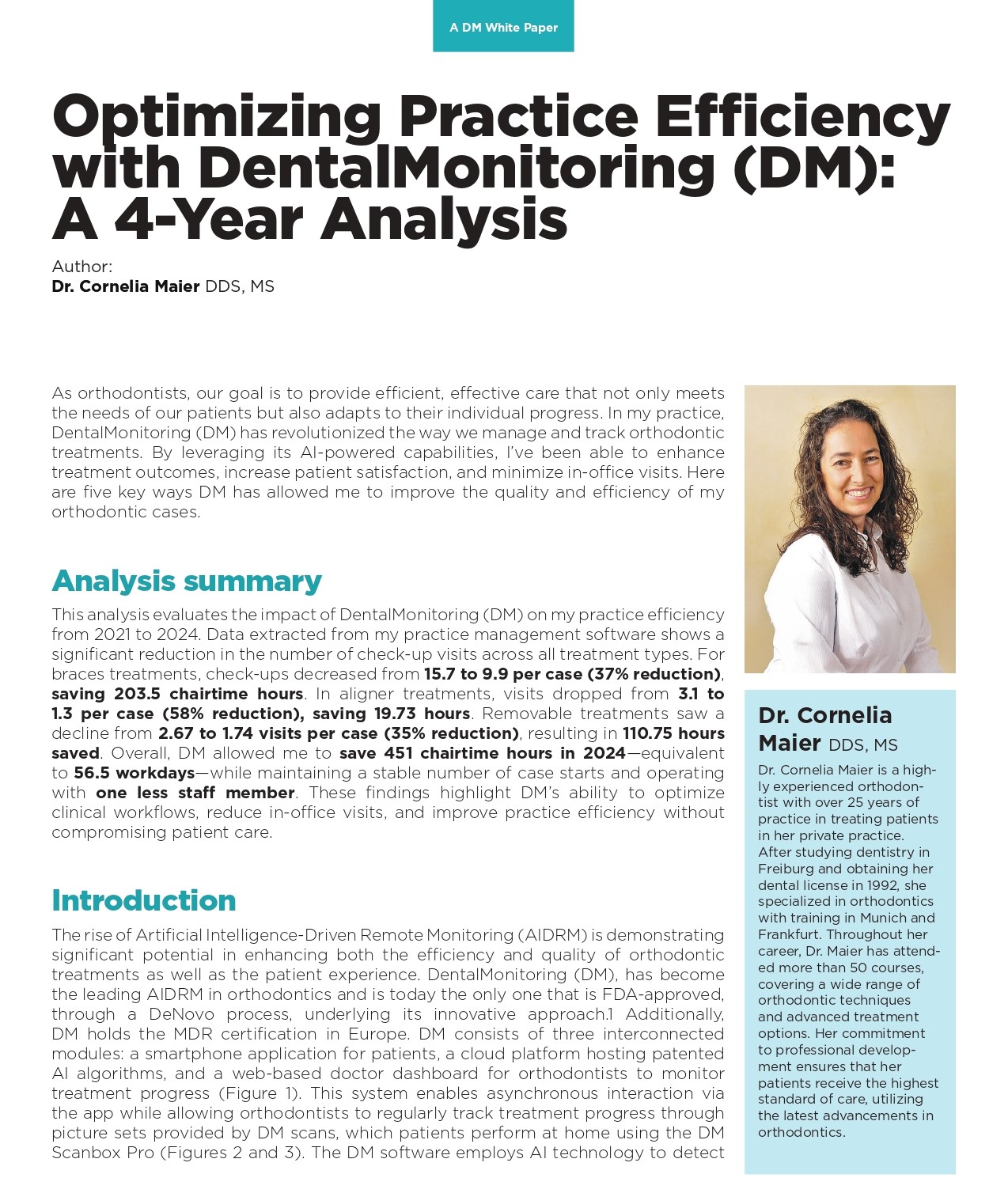
Optimizing practice efficiency with DentalMonitoring (DM): a 4-year analysis

In this 4-year retrospective analysis, Dr. Cornelia Maier evaluated the impact of DentalMonitoring (DM) on clinical efficiency across braces, aligner, and removable appliance treatments. DM led to a 37% reduction in check-up visits for braces, 58% for aligners, and 35% for removable appliances, saving a total of 451 chairtime hours in 2024 equivalent to 56.5 workdays. These efficiency gains were achieved while maintaining stable case starts and operating with one fewer staff member. The study confirms that DM enables an “appointment-when-needed” model, optimizing workflows without compromising care quality.

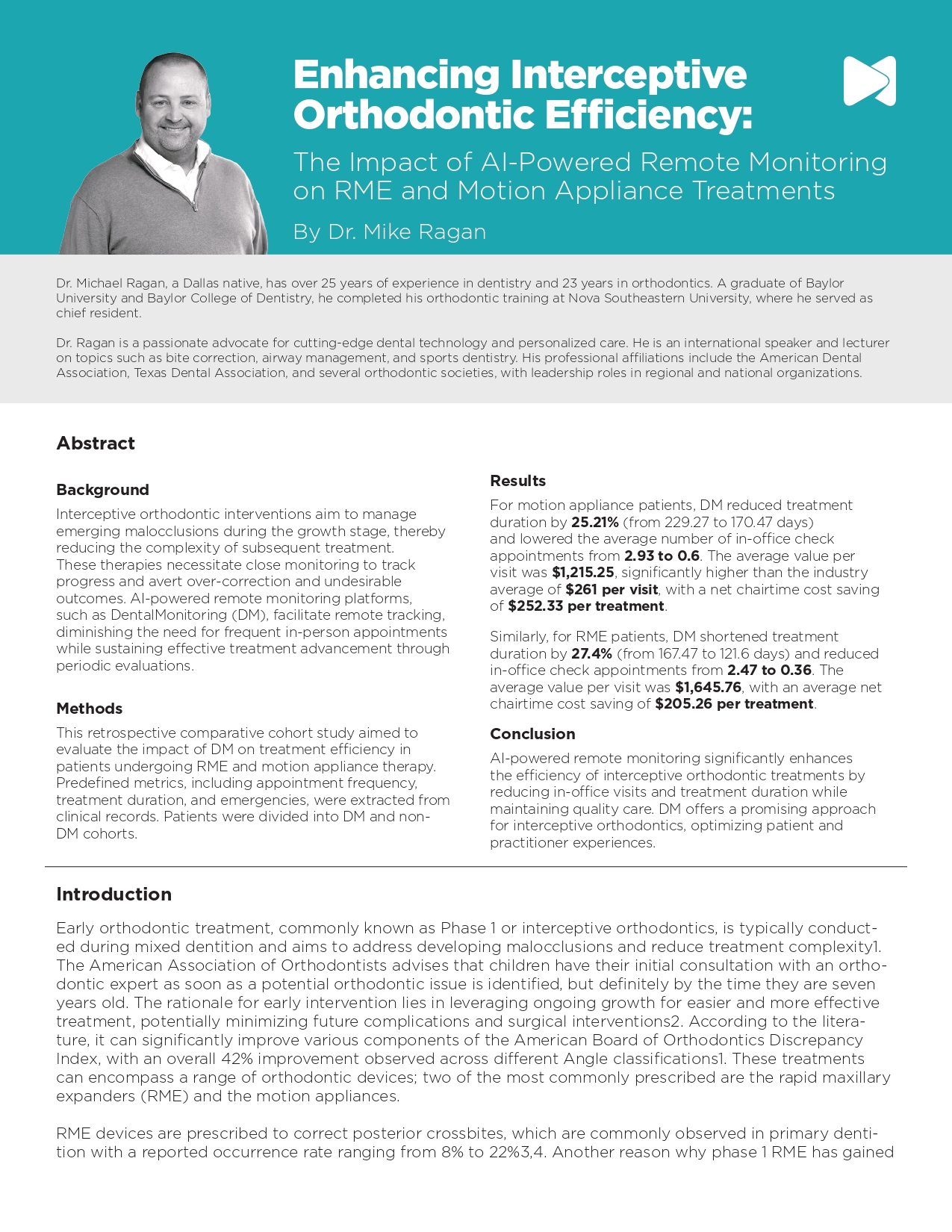
Enhancing interceptive orthodontic efficiency

This retrospective study evaluated how AI-powered DentalMonitoring (DM) impacts treatment efficiency in interceptive orthodontics using rapid maxillary expanders (RME) and motion appliances. Compared to traditional in-office follow-up, DM significantly reduced treatment time (by 25–27%) and in-office check appointments (from ~3 to <1 per patient) while maintaining clinical outcomes. For both RME and motion appliance treatments, DM increased the average value per visit and saved $200–250 in chairtime cost per patient. These findings highlight DM’s potential to enhance clinical efficiency, reduce unnecessary visits, and support high-quality, personalized care in early orthodontic interventions.

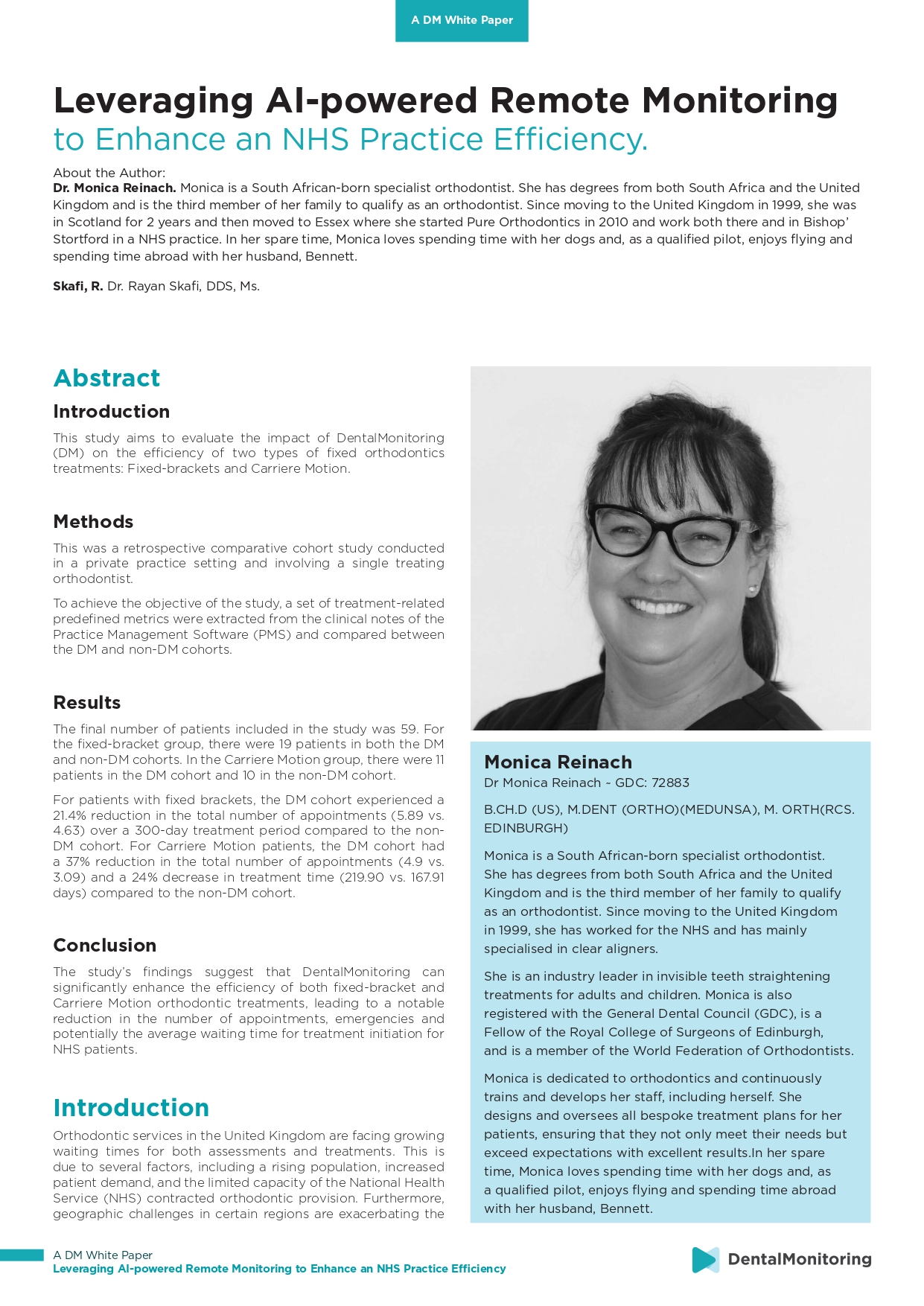
Leveraging AI-powered remote monitoring to enhace an NHS practice efficiency

This UK-based study evaluated the impact of DentalMonitoring (DM) on treatment efficiency in NHS patients with fixed-bracket and Carriere Motion appliances. In the fixed-bracket group, DM reduced appointments by 21.4% over a standardized 300-day period. In the Carriere Motion group, DM led to a 24% reduction in treatment time and 37% fewer appointments. These efficiency gains significantly decreased average wait times—from 14 weeks to just 3—and improved both patient satisfaction and staff workflow. The findings support DM as a valuable tool to boost capacity, reduce chair time, and enhance care delivery within NHS orthodontic practices.

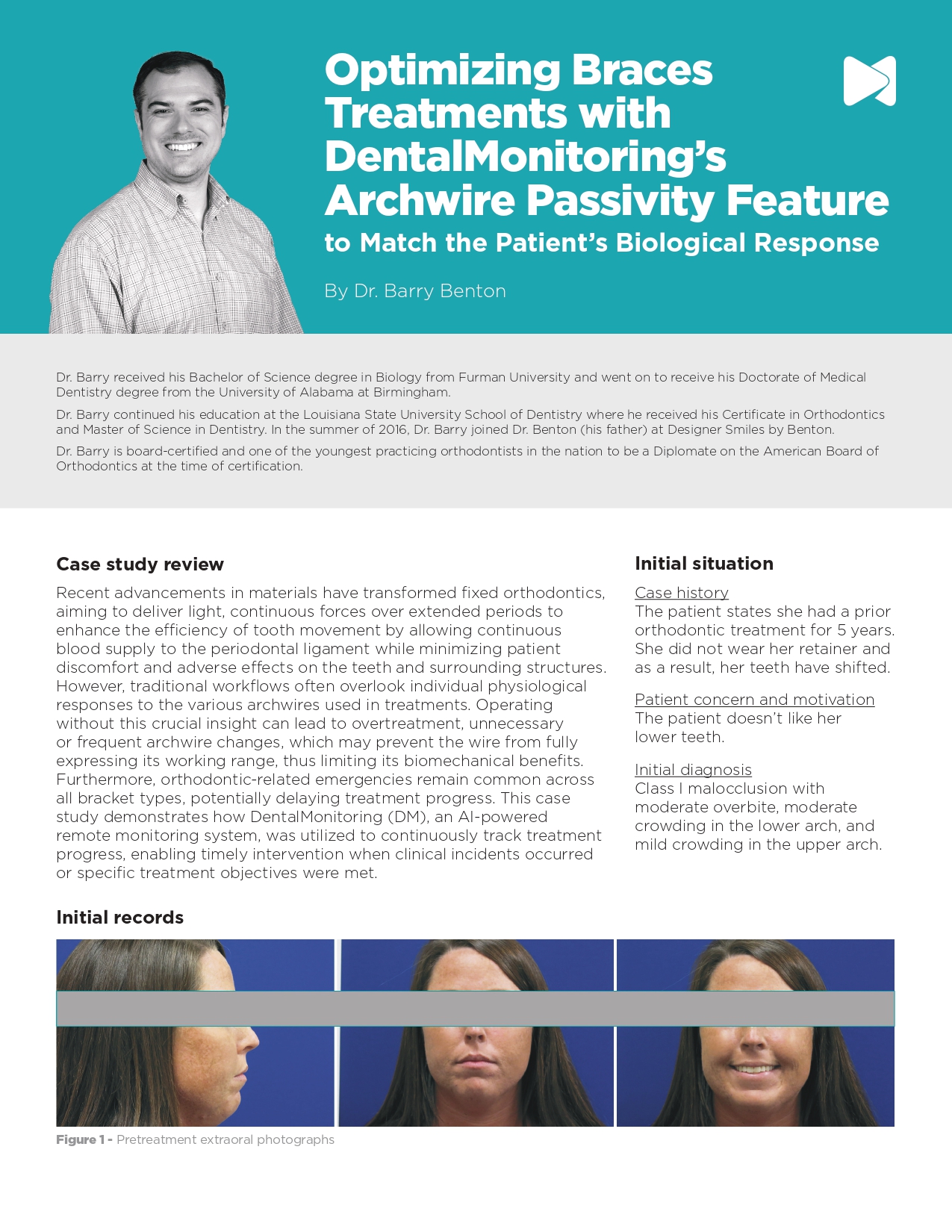
Optimizing braces treatments with DentalMonitoring's archwire passivity

This case study illustrates how DentalMonitoring’s archwire passivity feature was used to optimize fixed appliance treatment by adapting to the patient’s biological response. Over 20 months, DM allowed for remote monitoring of tooth movement, timely archwire changes, and early detection of six clinical issues—all with just 10 in-office visits and one emergency appointment. AI-driven alerts, remote guidance, and patient communication via DM chat minimized disruptions and improved efficiency. The result was a biologically sensitive, non-extraction treatment with excellent outcomes and enhanced patient experience.

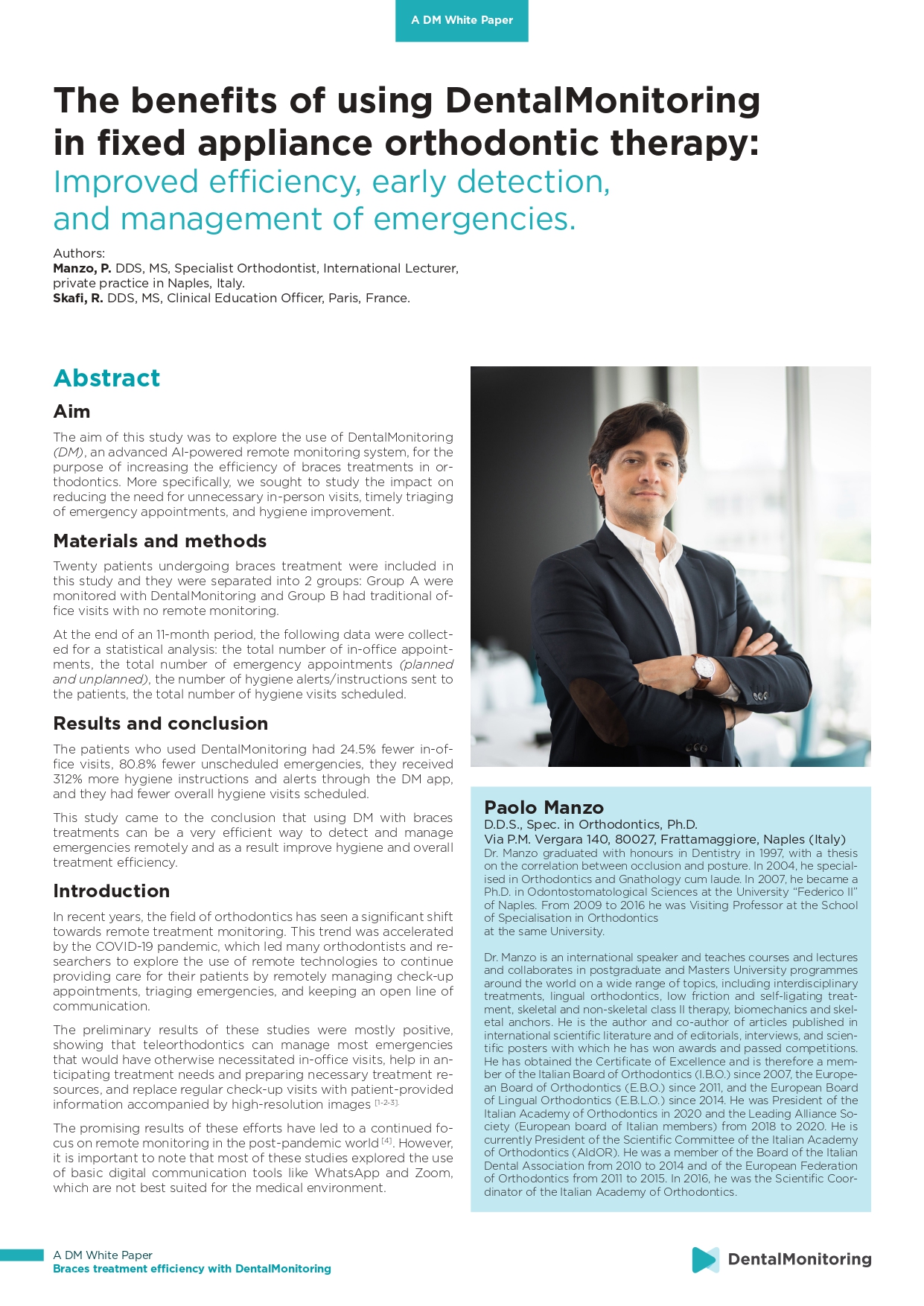
The benefits of using DM in fixed appliance orhtodontic therapy: Improved efficiency, early detection and management of emergencies

This study evaluated the impact of DentalMonitoring (DM) on fixed appliance efficiency in a cohort of braces patients. Over 11 months, the DM group had 24.5% fewer in-office visits, 80.8% fewer unplanned emergencies, and received 312% more hygiene alerts than the control group—leading to fewer hygiene appointments. Early AI-driven detection enabled many issues to be resolved remotely, reducing unnecessary visits and improving treatment continuity. The findings highlight DM's potential to enhance emergency triage, reinforce oral hygiene, and streamline workflows in orthodontic practices using fixed appliances.

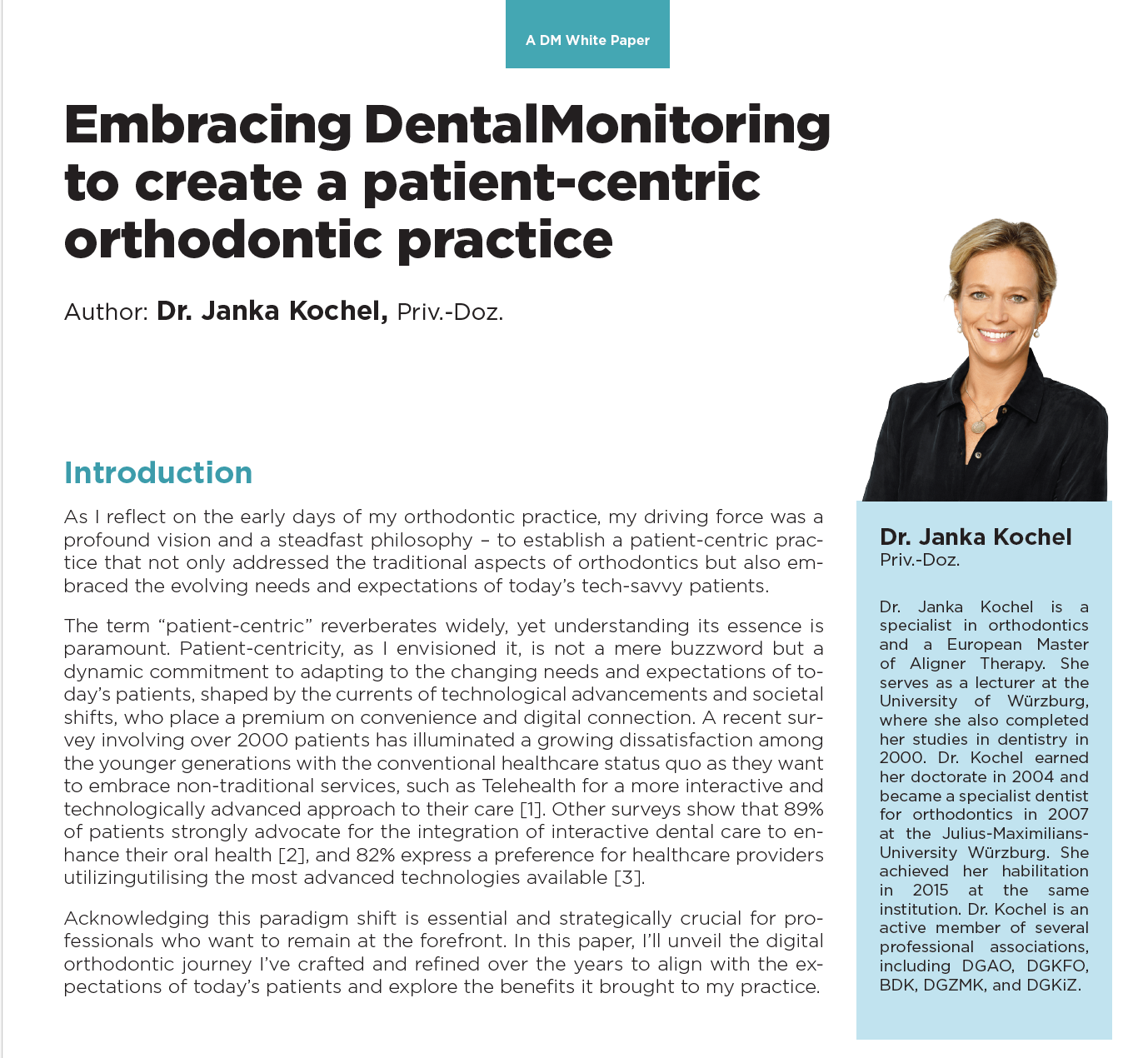
Embracing DentalMonitoring to create a patient-centric orthodontic practice

The purpose of the study: to evaluate the integration of DentalMonitoring (DM) in a patient-centric orthodontic practice and its impact on efficiency and patient satisfaction. Results showed a significant reduction in the number of in-office visits, with appointments decreasing by 25% for expansion treatments, 41% for braces, and 67% for aligners. The practice saved 209 hours annually, allowing for more case starts without additional hires. Patient satisfaction was high, with 84 out of 250 patients responding positively, noting increased engagement and effective communication through the app. The DM system improved clinical control and documentation precision, aligning with the expectations of tech-savvy patients.

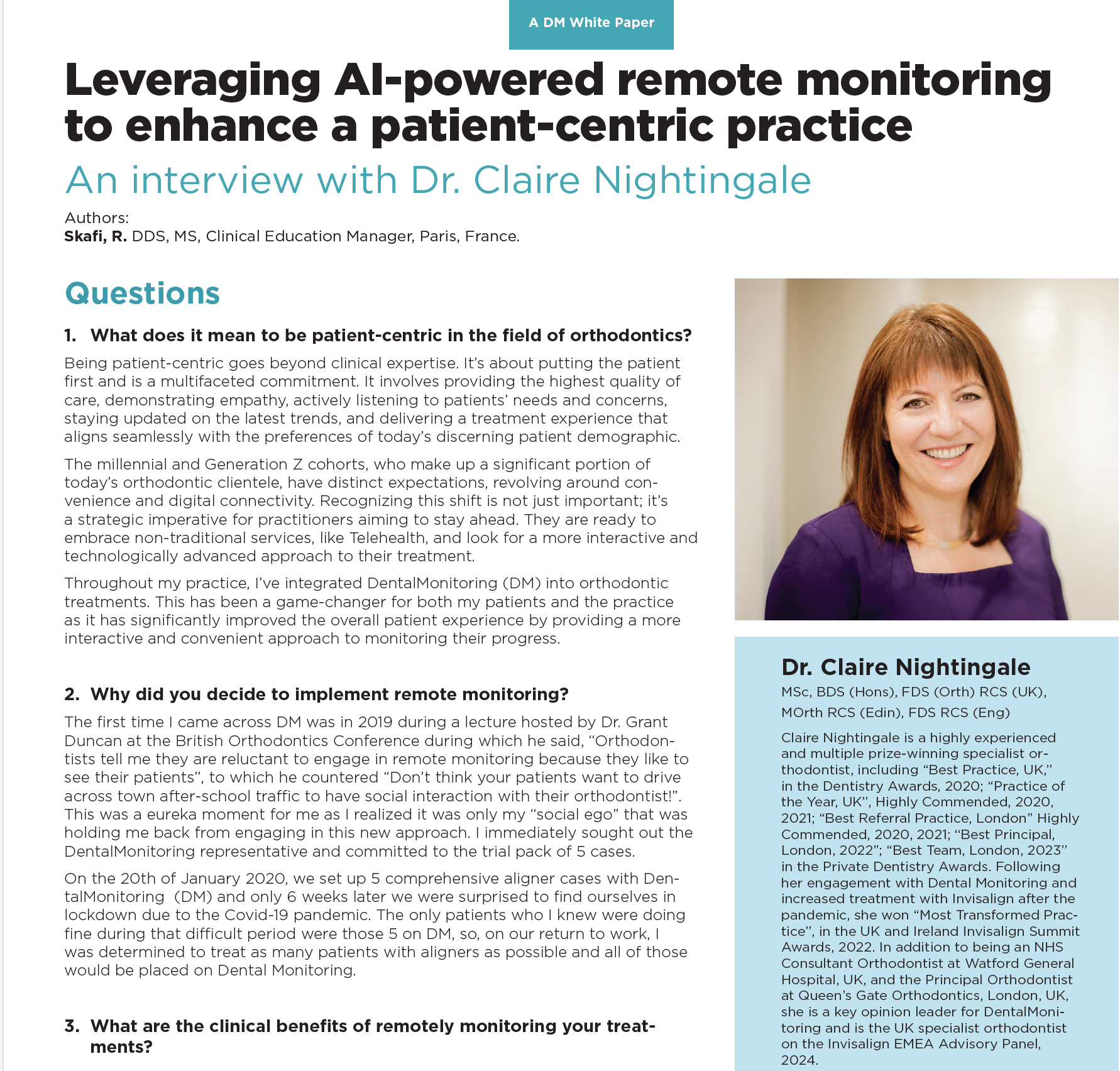
Leveraging AI-powered remote monitoring to enhance a patient-centric practice

The purpose of the study: to assess the impact of integrating AI-powered remote monitoring through DentalMonitoring (DM) in enhancing a patient-centric orthodontic practice. Results indicated a significant reduction in unnecessary adjustment visits, with aligner treatments showing a 32% decrease in such visits. The practice saved 220 appointments annually, improving efficiency and allowing for more new patient consultations. Patient satisfaction was high, with positive feedback on increased engagement and reduced in-person visits. The DM system enhanced clinical control and streamlined operations, aligning with the preferences of modern patients.
721

Expanding appointment intervals with Dental Monitoring

Dr. Dabney, an orthodontist, discloses effects of utilizing DM in his single doctor practice. Dr. Dabney reports that through the use of DM, his braces patients' value per visit is $384 with 15.4 visits and his aligner patients’ value per visit is $779 with 5.6 visits $451 for clear aligner patients, compared to the average value per visit for single doctors with braces patients: $297 with 19 visits; and with aligner patients: $451 with 12 visits (averages reported by Gaidge and Impact 360).
Back To Top

Quality of Care

Digital tools are necessary for the continued evolution of the orthodontic industry.

Research how DentalMonitoring creates measurable improvements in treatment outcomes.
Screen-Shot-2022-09-23-at-16.33.55.png

Case Study - Can DentalMonitoring data improve clinical outcomes?

DM Insights highlighted that one tooth in particular accounted for over twice as many bracket debonds compared to any other single tooth. Met with his team and made adjustments to how that bracket was placed and the techniques used during a patient’s initial bonding appointment. The result was that the repair visits for that tooth drastically decreased and fell in line with the debonding rate for the other teeth- positive effect on practice efficiency.

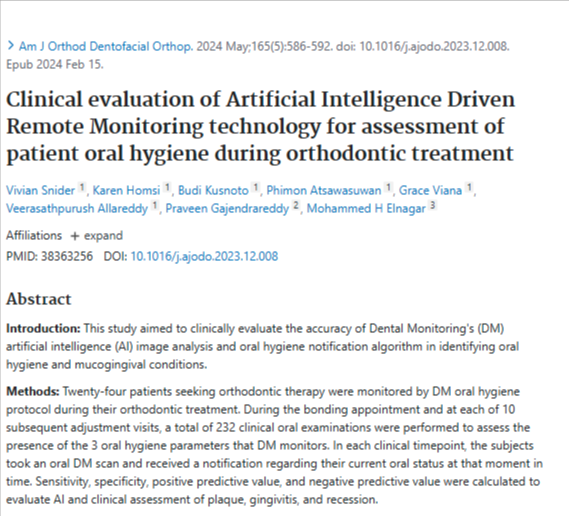
Clinical evaluation of Artificial Intelligence Driven Remote Monitoring technology for assessment of patient oral hygiene during orthodontic treatment

This clinical study evaluated the accuracy of DentalMonitoring’s AI algorithm in detecting plaque, gingivitis, and recession during orthodontic treatment. Across 232 clinical time points in 24 patients, DM’s AI showed high specificity (94–99%) and very high positive predictive value (95–98%), meaning it accurately confirmed when these conditions were present. However, sensitivity was low (22–53%), indicating a tendency to underreport their presence. Overall, while DM reliably detects when no hygiene issues exist, it may miss early signs of poor hygiene, emphasizing the importance of clinical oversight for comprehensive care.

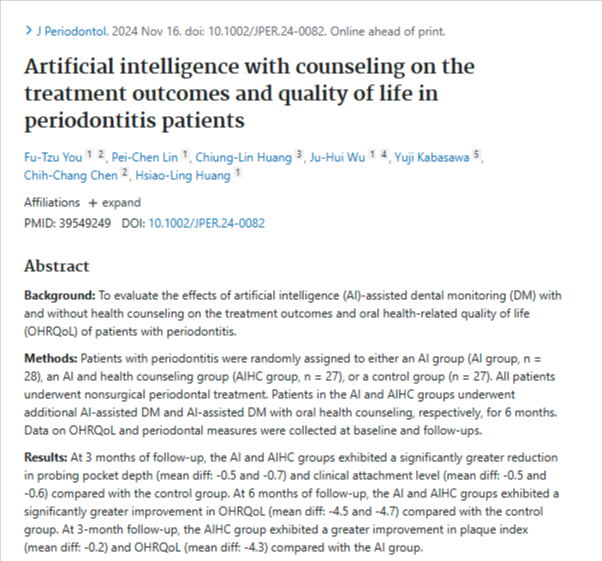
Artificial intelligence with counseling on the treatment outcomes and quality of life in periodontitis patients

This randomized controlled trial evaluated the impact of AI-assisted dental monitoring (DM), with and without health counseling, on periodontal outcomes and oral health-related quality of life (OHRQoL) in patients with periodontitis. At 3 and 6 months, both AI and AI+Counseling groups showed significantly greater improvements in probing depth, clinical attachment, plaque index, and OHRQoL compared to controls. The group that received AI plus counseling saw the greatest benefit, particularly in plaque control and quality of life at 3 months. The study supports AI-assisted DM—especially when combined with personalized guidance—as an effective adjunct for improving periodontal health and long-term patient well-being.
confident-doctors-discussing-medical-chart-male-female-healthcare-workers-are-wearing-lab-coats-they-are-working-hospital

Impact of a smartphone application on oral hygiene during orthodontic treatment: a controlled study.

Patients who benefited from the DM application for one month, improved their plaque control with more predictability after 2 months. The reduction of gingival inflammation was statistically significant in the Intervention Group (p-value 0,05). Despite its small sample size, this study shows that remote monitoring used for a short period could be efficient to change hygiene habits and enhance oral conditions over time.

Clinical follow-up of corticotomy accelerated Invisalign orthodontic treatment with Dental Monitoring.

Treatment protocols involving clear aligners in association with alveolar corticotomy have been developed in response to this demand. Alveolar corticotomy surgery can accelerate orthodontic tooth movement, but good clinical follow-up is crucial and can become cumbersome as the frequency of aligner changes accelerates. Clinical follow-up with DentalMonitoring could thus allow for better and easier management of corticotomy-accelerated clear aligner orthodontic treatment.

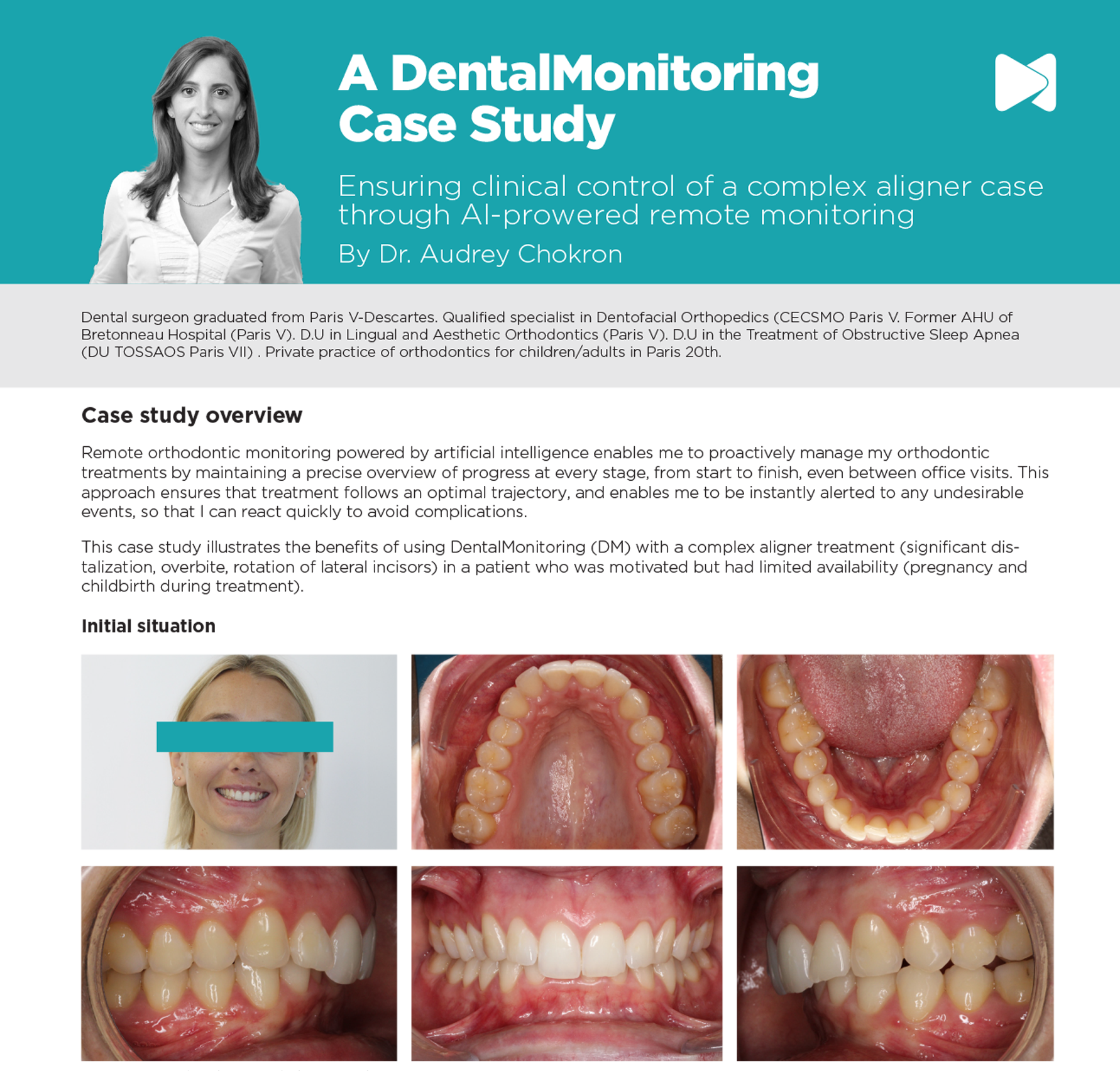
Ensuring clinical control of a complex aligner case through AI-prowered remote monitoring

The case study, led by Dr. Audrey Chokron, demonstrates the impact of integrating AI-powered remote monitoring through DentalMonitoring (DM) in managing a complex orthodontic case involving significant dental movements. The patient, a 35-year-old woman, underwent aligner treatment despite challenges such as pregnancy and limited availability. The AI-driven system facilitated proactive management of the treatment, detecting issues like aligner unseating and enabling quick adjustments, reducing in-office visits to just seven over the 22-month treatment. The study highlights improved compliance, enhanced communication, and optimized treatment results through 90 DM scans and AI-based alerts, which ensured high precision in tracking and adjusting the treatment trajectory remotely.

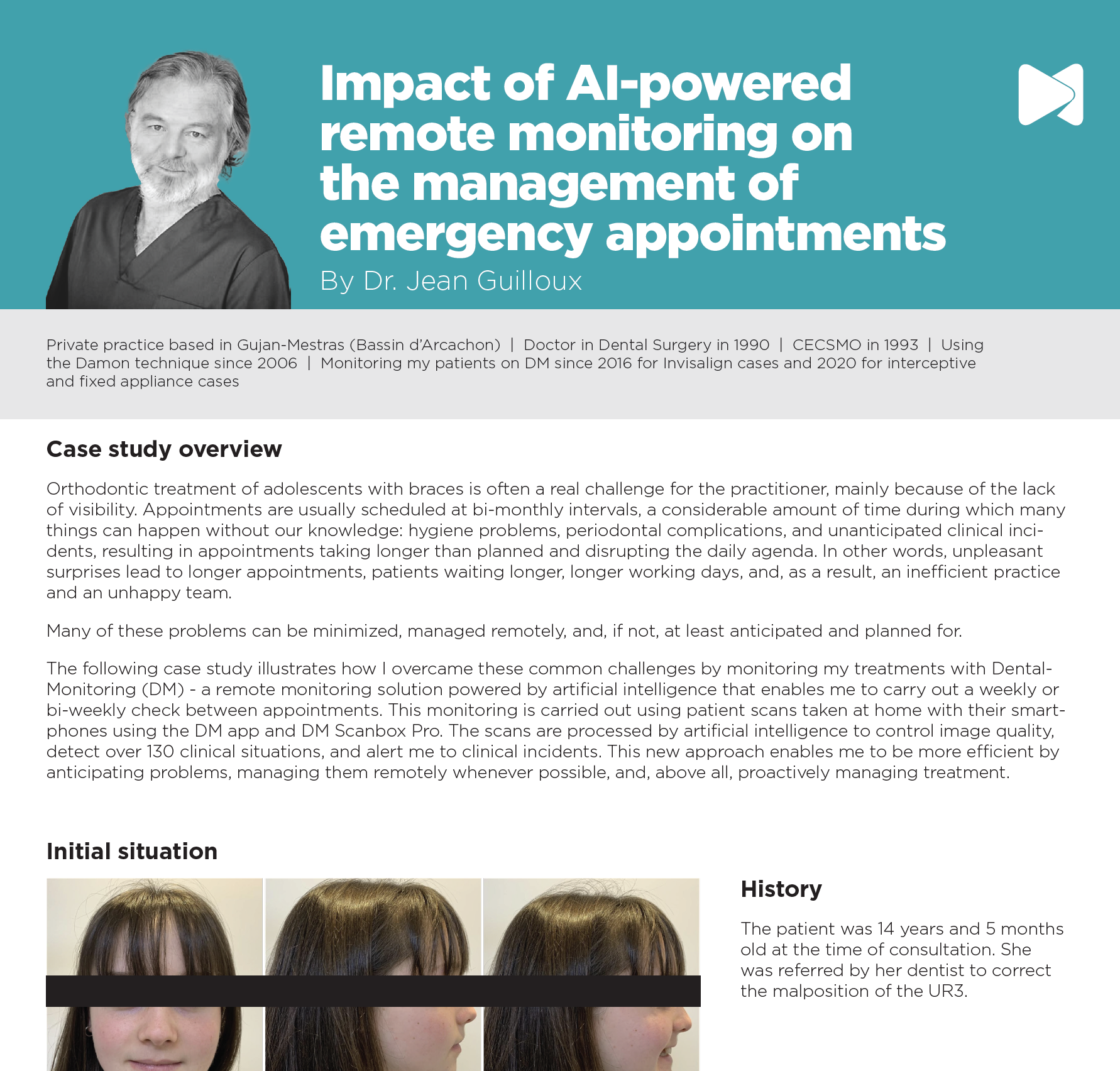
Impact of AI-powered remote monitoring on the management of emergency appointments

The purpose of the study: to evaluate the impact of integrating AI-powered remote monitoring through DentalMonitoring (DM) on orthodontic treatment management. The study found a significant reduction in emergency appointments, with 4 out of 5 incidents managed remotely. Remote monitoring improved hygiene compliance through regular reminders, and proactive treatment management by setting and tracking treatment goals. This approach minimized unnecessary visits, enhanced treatment quality, and improved practice efficiency. The DM system significantly optimized workflow, improved patient experience, and increased overall practice efficiency.

5 ways DentalMonitoring greatly enhances my orthodontic treatment process

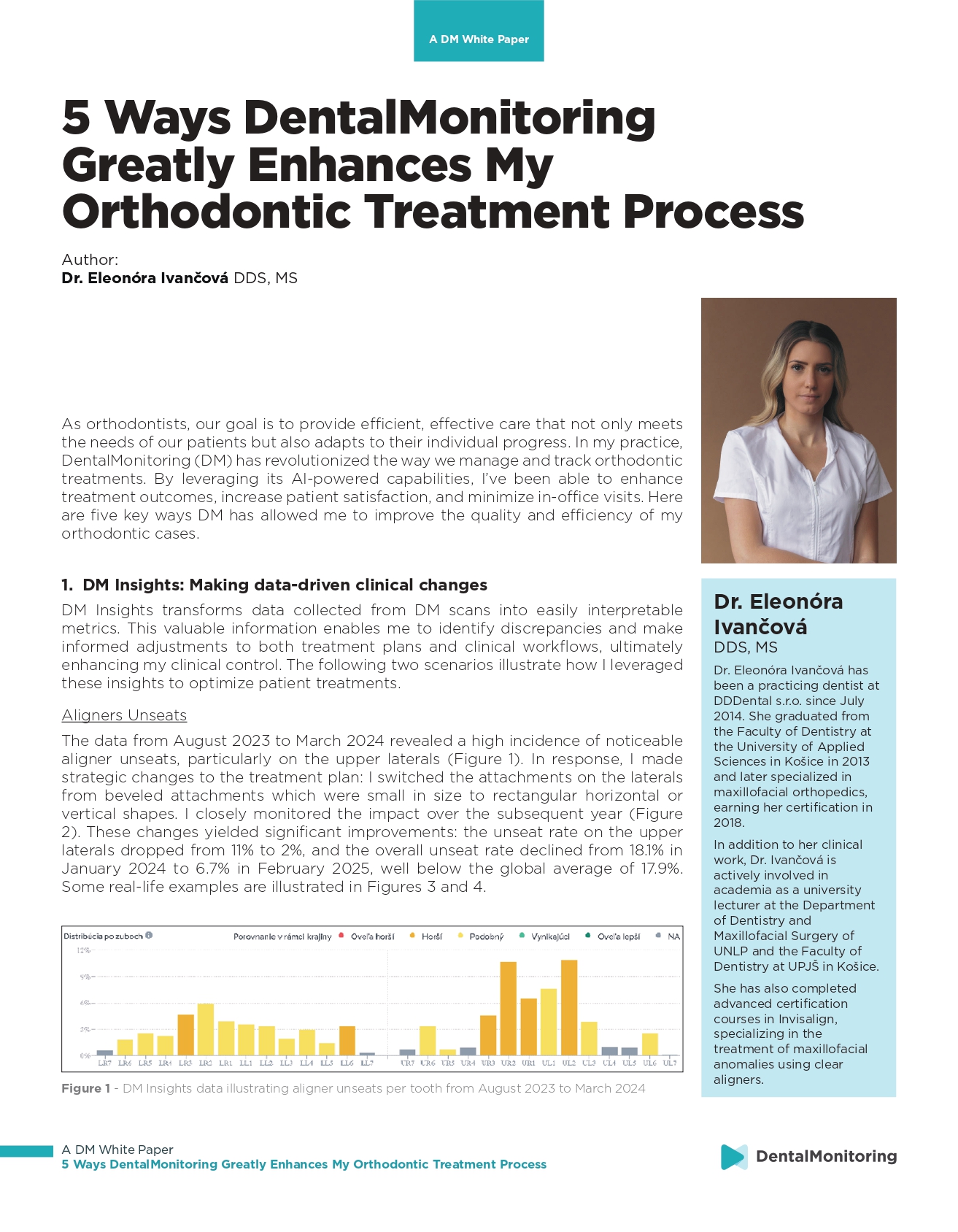
This clinical white paper by Dr. Eleonóra Ivančová highlights five ways DentalMonitoring (DM) enhanced her orthodontic practice. Using DM Insights, she identified frequent aligner unseats and high plaque levels early, enabling targeted protocol adjustments that reduced unseat rates by over 60% and improved hygiene. Real-time remote scans allowed her to catch fitting issues, prevent gingival recession, and modify biomechanics mid-treatment. DM also improved tracking during mixed dentition, ensured early detection of retention relapse, and flagged oral pathologies. The result: fewer in-office visits, better treatment control, and more personalized, efficient care.
Back To Top

Patient Experience

Patients deserve a convenient treatment experience.

Explore the collected literature on how doctors are making the patient experience more convenient by using DentalMonitoring.
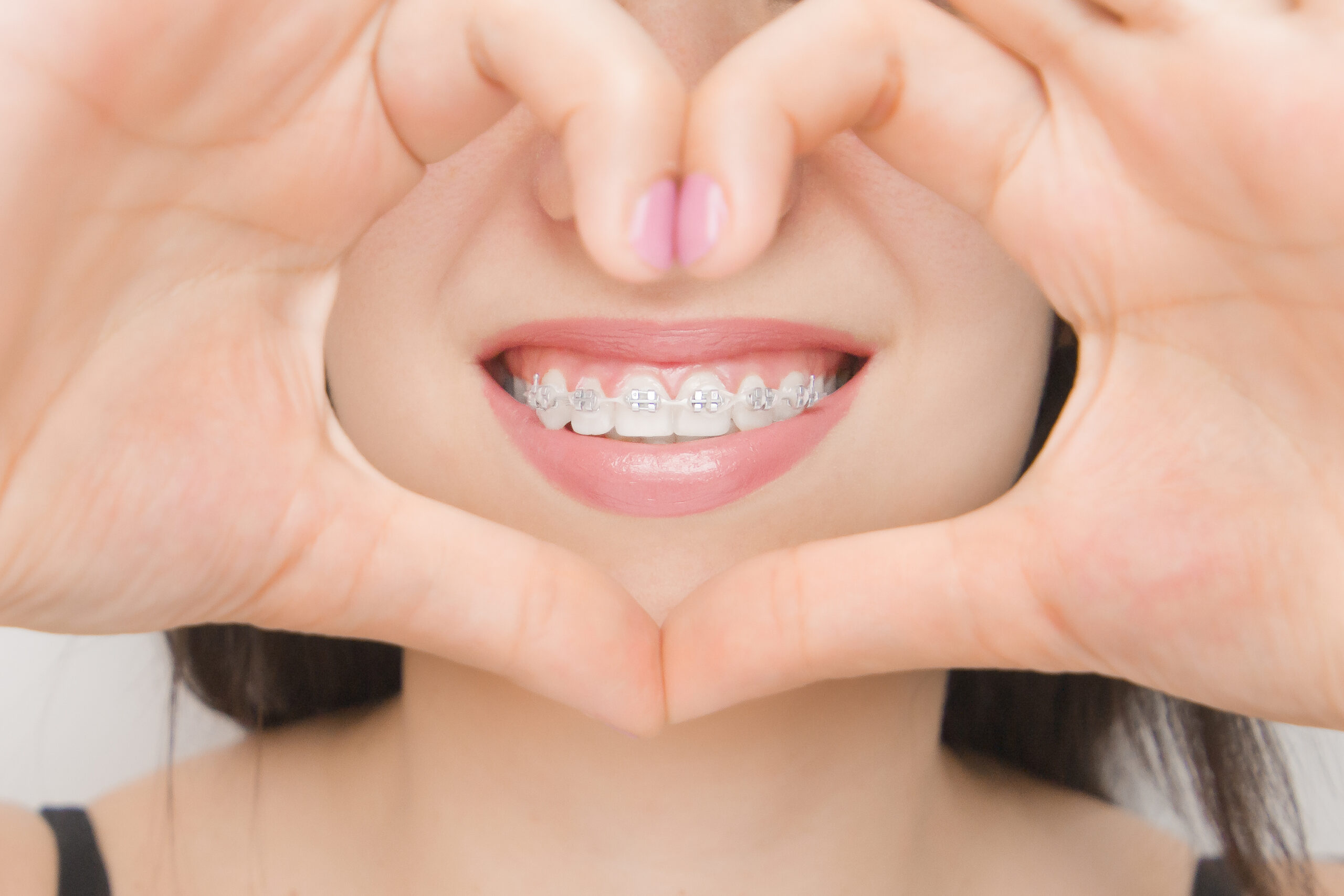
Patient Attitudes towards DentalMonitoring: A global study - Survey of 2248 Patients in 12 countries

The purpose of this study was to analyze the attitude of orthodontic patients of different ages and in different countries towards the use of DentalMonitoring. 86% of patients said that they were globally satisfied with their experience, 89% said it was very beneficial to be able to communicate with their orthodontist via the DM app, 86% felt more reassured and 88% found it easy to use. In addition, most patients (76%) felt more engaged and compliant with a more positive impact on hygiene. The most mentioned benefits, when asked about their favorite part of their experience, were “more convenience due to fewer visits”, “better communication” and “reassurance”. This study proves that AI-powered remote monitoring can provide orthodontists with a big leap toward building a true patient-centric practice that would result in more satisfied, cooperative, and loyal patients.

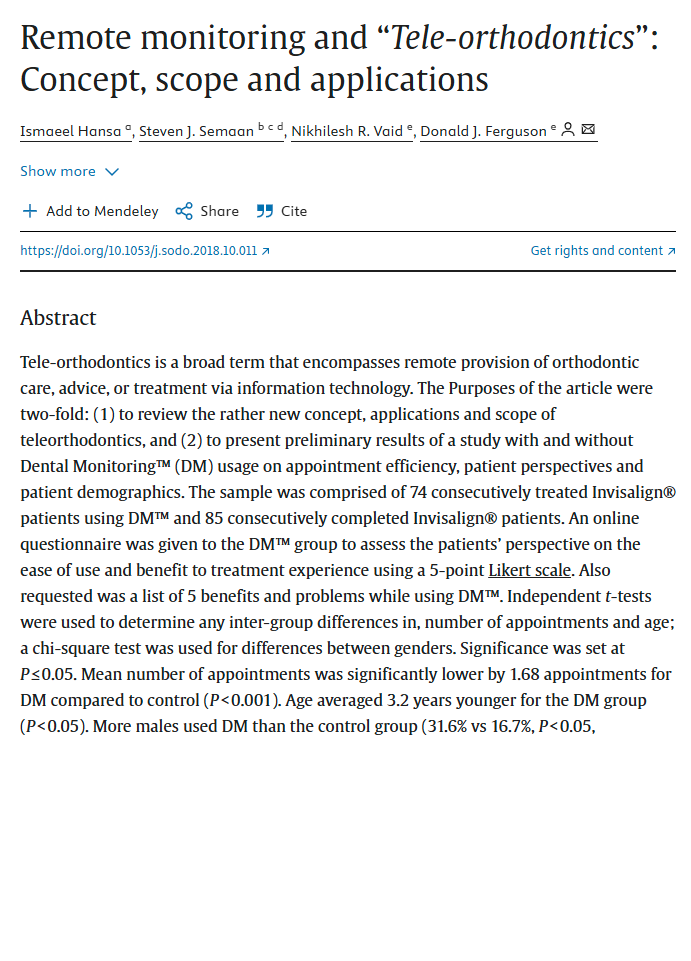
Remote monitoring and “Tele-orthodontics”: Concept, scope and applications

This study explored the role of teleorthodontics, specifically DentalMonitoring™ (DM), in improving appointment efficiency and patient experience during Invisalign® treatment. Comparing 74 DM users to 85 non-DM controls, results showed that DM users had significantly fewer appointments (1.68 fewer on average, P < 0.001), were younger by 3.2 years, and included a higher proportion of males. Patient feedback was highly positive, with average ratings of 4.31/5 for ease of use and 4.4/5 for treatment benefit. Commonly cited benefits included better communication, greater convenience, fewer visits, and ease of use, while main challenges involved scan difficulty and reduced communication. Overall, the findings support DM as an effective tool to reduce in-office visits while maintaining a positive patient experience.
Back To Top

Backed by science

Our AI-based approach to helping orthodontists optimize treatment is a radical change in the industry. Because of the newness of our technology, the scientific literature on remote monitoring is a growing field and updates will be frequent.

Evidence

AI-powered solutions

DentalMonitoring brings dentists and orthodontists the world’s first remote monitoring solutions.

Learn More

White papers

More studies to support Smarter Orthodontics

Explore the collected literature on how doctors are making the patient experience more convenient by using DentalMonitoring.